There are only two options at midnight, and both of them are allowed. Get up and eat something, or lie there and wait it out. What makes it feel harder than a two-way choice is that most advice on how to sleep when you're hungry arrives with a verdict already attached — that eating late is a failure of discipline, or that going to bed empty is somehow purifying — so instead of picking, you spend half an hour arguing with yourself, and the argument costs more of the night than either option would have. Hunger isn't a test of character. It's a signal, and you're allowed to answer it. For what it's worth: a small something is usually the easier road, and a full meal usually isn't.
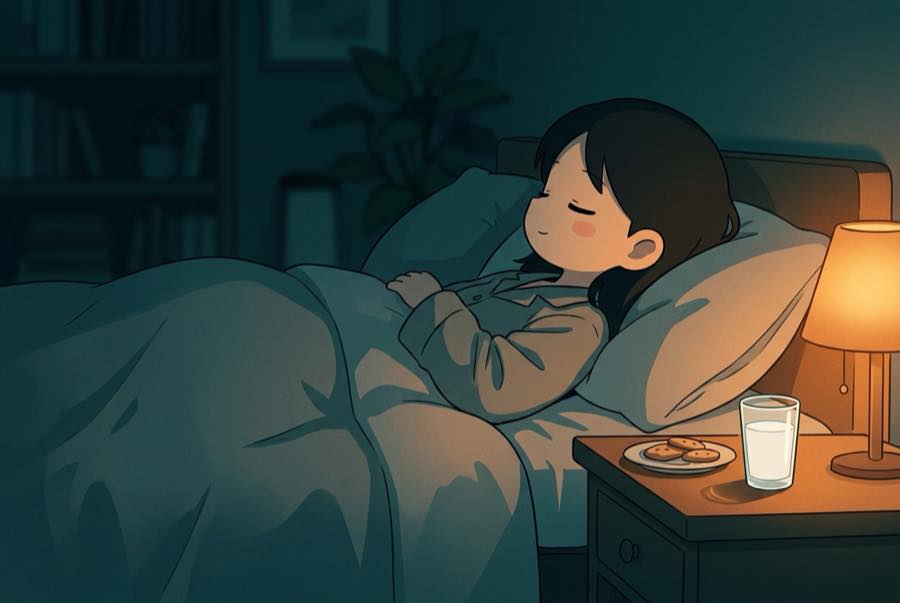
Hunger at bedtime is information, not weakness
An empty stomach is one of the few signals built to interrupt you. It doesn't fade politely when you close your eyes, and it gets louder in a dark room for the same reason a dripping tap does — there's nothing else competing for your attention. That's why "just ignore it" so often fails. Ignoring works reasonably well on thoughts. It works badly on a body making a request.
It usually helps to know where tonight's version came from, because the cause tells you how much to do about it. A dinner that was earlier or lighter than usual. A hard training session that quietly raised the day's bill. A long shift that pushed eating to the edges. A day where lunch got skipped and the evening never made up the gap. None of those need a strategy. They need a small correction and then permission to stop thinking about it.
One honest exception, and it's worth saying plainly: hunger that wakes you out of sleep most nights, or that turns up alongside shakiness, sweating, unusual thirst, or a change in weight you can't account for, is a conversation for your doctor rather than something to solve with a bedtime routine. The same goes if you take medication that affects blood sugar — nighttime hunger belongs with the person who knows your numbers, not with a page about sleep sounds.
How to sleep when you're hungry: keep it small and plain
If you're actually hungry — not restless, not bored, not just awake — something small usually settles it faster than waiting does. The aim is to take the edge off, not to make dinner at 11:30pm.
We're not going to tell you what to eat. That depends on your body, your diet, and a dozen things a sleep page has no business guessing at. What we can talk about is the shape of it rather than the contents: modest rather than a full plate, plain rather than rich, and familiar rather than experimental. Something your stomach has handled without comment before is not the thing to trade up from tonight. Anything further down this page that sounds like a rule about food isn't one — it's a note about what tends to be uncomfortable to lie down on, which is a much narrower claim.
The way you eat it matters too, more than people expect. Do it in the kitchen with the lights low, sitting down, without the phone. Standing in the fridge glow scrolling turns a two-minute fix into twenty minutes of bright light and other people's news, and now you have two problems. Then give it a little while — fifteen or twenty unhurried minutes — before you lie flat, and use that time for the ordinary end of your wind-down rather than starting the evening over. If you don't have a wind-down to return to, how to relax before bed is the short version of building one.
What tends to sit badly late at night
The reason "eat something" comes with a caveat isn't nutritional. It's postural. The thing that makes midnight different from seven in the evening is that you're about to spend the next several hours horizontal, and horizontal is the position most of these complaints are actually about. General sleep guidance, the Sleep Foundation's included, points away from big meals close to bedtime, and most people can confirm it from experience: lying flat on a very full stomach is uncomfortable, and for anyone prone to reflux it's worse than uncomfortable.
So take what follows as a list of things that tend to sit badly when you're lying down, not as advice about what belongs in your diet. Very rich or very spicy food takes longer to move and tends to make lying flat unpleasant. Alcohol is drowsy on the way in and unreliable in the second half of the night. Caffeine hides where you didn't think to look — chocolate, some teas, whatever was left in the can on the desk. And anything large and sugary leaves plenty of people oddly wide awake half an hour later. None of that is a judgement about the food. All of it is a judgement about the hour and the angle.
There's a longer-term note too, and it's a softer claim than it's usually made. Some people find that a real midnight meal, repeated night after night, turns into an appointment — the hunger starts arriving at the hour the food used to, rather than at the hour the day ran short. We wouldn't state that as a rule for everybody. Either way, once is nothing, a pattern is worth noticing, and the fix lands during the day rather than at 1am.
When it isn't quite hunger
Some nights the stomach is a stand-in for something else. Thirst reads as hunger surprisingly often, and it's the cheapest thing to rule out — a glass of plain water and ten minutes will tell you. If the feeling eases, it wasn't food. If it's still there, it was.
Habit and boredom are the other two impostors, and they're most convincing exactly when the bed has stopped working. The kitchen is somewhere to go. Snacking is something to do with your hands. That's not hunger so much as a room you'd like to leave, and eating won't fix it because the problem was never in your stomach. If most of what's happening is that you're wide awake with hours to fill, the broader version of that night is in why you can't sleep at night.
And if you're eating deliberately less during the day, evening hunger is the predictable second half of that arrangement rather than a surprise. Whatever you decide about it, decide it in daylight. One in the morning is the worst possible hour to relitigate a food plan, and nothing you conclude then will survive breakfast anyway.
Give your attention something steadier to hold
Once the food question is answered, what's left is attention. A body that wants something is very good at holding yours, and a dark, silent room gives it no competition — which is why the grumbling seems to get louder after lights out even though nothing about your stomach has changed. Sound doesn't settle a stomach and we won't suggest it does. What it does is put a second thing in the room, something plain, continuous and faintly boring, so that the stomach is one of two things you could be noticing rather than the only one.
For a night like this we'd reach for Rain on the Roof — All Night Sleep — rain overhead, no thunder, nothing that changes its mind partway through, which matters because a sound with events in it just hands your attention a second thing to track rather than a place to put it down. The tracks hold their level right to the end instead of fading out, so repeat on and any sleep timer off before you lie down. If the grumbling starts up again at three and the negotiation begins over, the room will be exactly as you left it. The standard a recording has to clear is set out in what makes a rain sound work. If rain isn't your sound, the other families are in the guide library.
Worth being straight about the limit: rain will not feed you. If you're genuinely empty, sound is not a substitute for the small plain thing in the kitchen, and using it to tough out real hunger mostly means lying there listening to rain while still hungry. The sound is for afterward — the stretch where the edge is off and you're just waiting to drift.
Move it upstream
Most nights of bedtime hunger are decided much earlier in the day. If you can spot the pattern — training days, long shifts, the days lunch disappears, the weeks dinner lands at five — the fix is a slightly larger or slightly later evening meal on those specific days rather than a midnight decision made badly. That's not a rule about eating. It's just moving the choice to an hour when you're capable of making it well.
The practical version
If you're hungry, eat something small and plain rather than lying there negotiating. Keep the lights low, sit down, leave the phone out of it, and skip anything very large, very rich, very spicy, or alcoholic. Rule out thirst first with a glass of water and ten minutes. Wait fifteen or twenty minutes before lying flat, and spend them on the quiet end of your usual wind-down rather than restarting the evening. Put steady rain on low, set to repeat, so a still-grumbling stomach isn't the loudest thing in the room. Then, in the morning, look at which days tend to end this way and eat a little more earlier on those days — it's a far better place to solve this than the dark.
This article is for general information and isn't medical advice. If sleep problems persist, talk to your doctor.