The pillow is warm on both sides. The sheet is off, then half on, and the air in the room isn't moving at all. Every position feels fine for about a minute, and you're starting to do the math on how much of the night is already gone. Nights like this need less effort, not more — so here is the honest version of how to sleep on hot nights: cool what you can, accept what you can't, and give your ears something steady while your body settles.
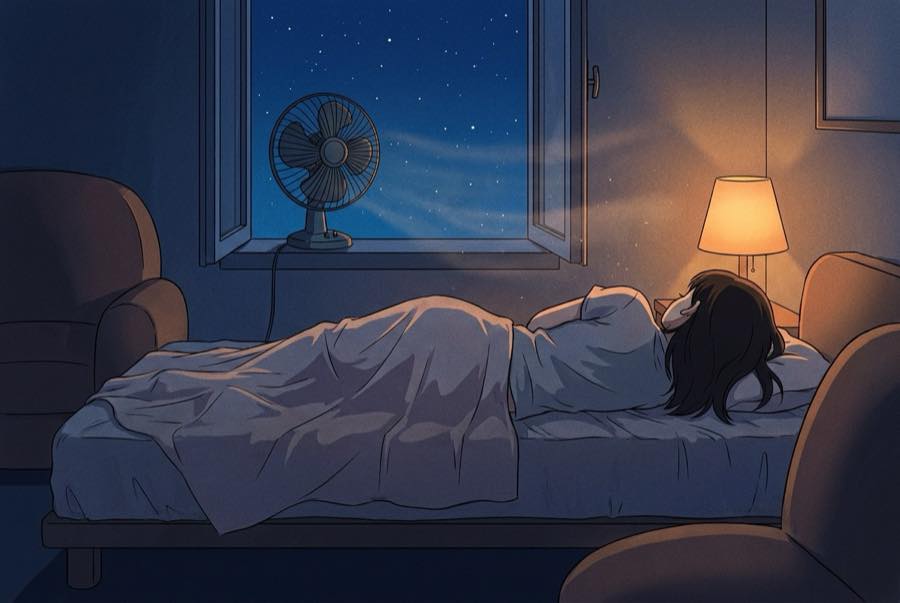
The steady part is the easy step. Play Fan Sounds for Sleep — Steady Hum — a deep bed of even fan hum to be the one constant in a room that feels anything but. Set it to repeat so the sound carries through the whole night instead of stopping somewhere in the small hours, and keep the volume low.
Now the rest of the plan, in the order that matters.
Why heat makes it harder to drift off
Your body cools slightly as it moves toward sleep — a small internal dip that many sleepers never notice until a warm room gets in its way. When the air around you is holding heat, that dip comes slower, and you feel it as restlessness: the flipping pillow, the leg out from under the sheet, the sense of being tired and alert at the same time.
None of this means the night is lost. It means the room is asking for a little help. The Sleep Foundation's guidance puts a comfortable sleeping temperature for most people somewhere in the mid-60s Fahrenheit, and NHS advice on better sleep says much the same in plainer words: a cool, dark, quiet bedroom is the one your body settles in fastest. You won't always get there on a hot night. You can usually get closer.
How to sleep on hot nights: cool what you can
Work through these gently. You don't need all of them — two or three usually change the feel of the room.
Cool the room before you need it. Heat that gets in during the afternoon is still there at midnight. Curtains or blinds closed on the sunny side during the day, windows open once the outside air turns cooler than the inside air. If you can open windows on two sides of your home, even a slow cross-breeze moves more heat than a fan pointed at your face.
Use the fan for movement, not just noise. A fan doesn't lower the temperature of a room; it moves air across your skin so your body can shed heat faster. Point it so the air actually crosses the bed, or set it in a window pushing warm indoor air out. Either way, the airflow is doing the physical work.
Cool the body, not only the air. A brief lukewarm shower before bed, a thin cotton sheet instead of the duvet, a glass of water within reach. Some sleepers run cool water over their wrists or keep their feet outside the covers. Small things — but on a hot night, small is what's available.
Then stop optimizing. There's a point where rearranging the room becomes its own kind of wakefulness. Once you've done what the room allows, the last move is to lie down, put the phone face-down, and let something steady hold your attention instead of the heat.
The fan hum, honestly
Here's something worth being clear about, because plenty of pages aren't: a recording of a fan moves no air. It will not cool you by a single degree. If your real fan is doing useful work, keep it running.
So what is the recording for? Two things. First, for many people the fan hum is the sound of sleep itself — years of warm nights have turned that low, even drone into a cue, and the cue works even when the airflow isn't the point. If that's you, the fuller story of that habit is in fan sounds for sleeping. Second, a steady hum masks the small noises of a hot night — the neighbor's window unit cycling, the street sounds through an open window — and that one sentence is the whole science we'll do here; the longer explanation lives in why rain sounds help sleep.
The hum also travels better than the fan does. A warm hotel room with a rattling AC, a stay at someone else's place with no fan at all — the recording restores the familiar part of the night when the hardware isn't yours. There's a full guide to that situation in how to sleep in a hotel.
What makes a hum sleepable is the same thing that makes rain sleepable: steadiness — every track here is held to the even, fade-free, loopable bar we explain in what makes a rain sound work. A fan recording that surges or clicks is just one more warm-night annoyance. These don't.
Setting up for tonight
Keep it simple, because you're tired and it's warm.
Open what can be opened, aim the fan across the bed, trade the duvet for a sheet. Then start Fan Sounds for Sleep — Steady Hum, turn on repeat so it runs until morning, and settle the volume while the lamp is still lit — one less decision waiting for you in the dark. If the hum turns out not to be your sound, there are other steady options — rain, ocean, ambient — in the full guides library.
One more honest line: a string of hot nights is uncomfortable, and rough sleep during a heat wave is normal, not a sign something is wrong with you.
Cool what you can. Let the hum hold the rest. Morning comes either way — you might as well sleep through the wait.
This article is for general information and isn't medical advice. If sleep problems persist, talk to your doctor.