You're in a bed that isn't yours, in a room your body doesn't recognize, listening to a hallway you can't quite tune out. Tomorrow matters — the meeting, the flight, the early start — and knowing that only makes the ceiling more interesting. If you're wondering how to sleep in a hotel when the room itself seems to be working against you, here's the calm version of the answer: what's happening to you is normal, it has a name, and there's a short list of things that genuinely help. None of them require effort at 1am. Most of them you set up once, before you're tired.
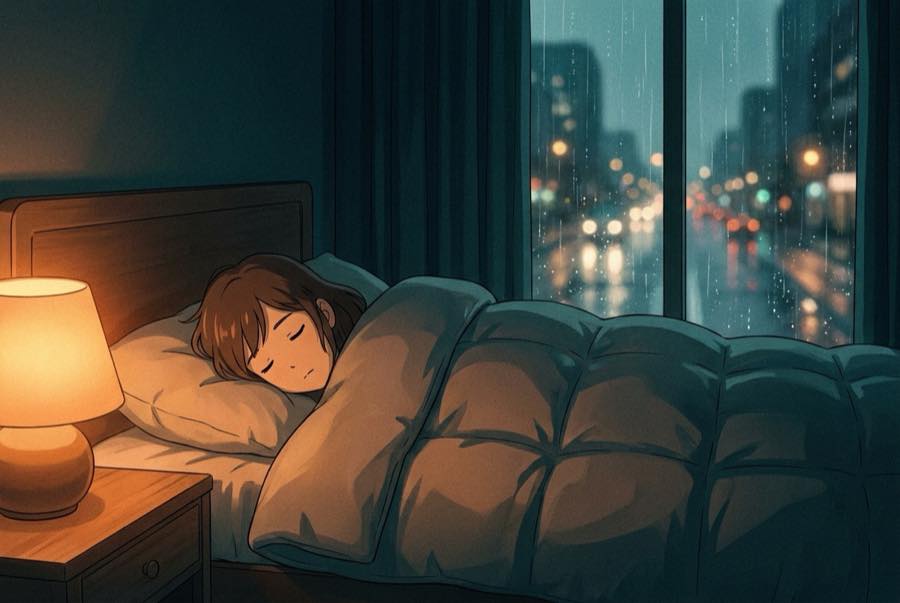
Why the first night in a hotel is the hardest
Sleep researchers call it the first-night effect. In an unfamiliar room, part of your brain stays a little more on watch than it does at home — many travelers sleep lighter, wake more easily, and take longer to drift off on night one, then settle noticeably by the second or third night. It isn't a personal failing and it isn't something to fix with willpower. It's an old instinct doing its quiet job in a place full of new sounds, new smells, and new shadows.
That instinct points straight at the method: you can't argue the watchfulness away, but you can give it less to watch. Fewer unfamiliar signals reaching you in the dark, and more familiar ones. Everything below is one version of that trade.
How to sleep in a hotel room: set it up before you're tired
The best time to prepare a hotel room for sleep is when you check in, not when you're already lying in it annoyed. Ten unhurried minutes is enough.
Cool it down early. Hotel rooms often run warm, and a warm room fights sleep. Set the thermostat a little cooler than feels necessary in the evening; it will feel right at 3am.
Get the room properly dark. Hotel curtains rarely close all the way. Use the clip on a pants hanger to pin the gap shut, and drape a towel or a shirt over the small glowing lights — the TV standby dot, the smoke-detector blink, the charging brick. In a strange room, every point of light is one more thing your brain checks on.
Settle the pillow question once. If the pillows are wrong, call down for another option or build what you need from the closet's spares now. Deciding at midnight, in the dark, is how a mediocre night becomes a bad one.
Put your phone where it lives at home. Same side of the bed, same charger routine. Small anchors like this sound trivial, but familiarity is exactly the currency a watchful brain trades in.
Bring your sound with you
Here's the piece most people forget to pack: what your nights sound like. A hotel gives you a stranger's soundtrack — ice machine, elevator, a door down the corridor, someone else's television through the wall. Each of those is new information for a brain that's already on watch. A steady, familiar sound raises the floor of the room so those spikes have less contrast to cut through; the full explanation of how that masking works lives in why rain sounds help sleep.
But in a hotel, the sound is doing a second job too. If you play the same thing every night, it becomes a cue — a portable piece of your own bedroom. The room is new; the sound isn't. For travel we reach for the fan family, because a low, even hum is the closest thing to a sound that isn't there at all: Fan Sounds for Sleep — Steady Hum — a steady pool of low, even hum that sounds exactly the same in every city you'll ever check into. Set it to repeat so it starts over instead of stopping mid-night, keep the volume low, and let it hold the room until your alarm.
Every track in it is curated to stay steady, never fade out, and loop cleanly — the full checklist lives in what makes a rain sound work — because in an unfamiliar room a sudden change in the sound is just one more event to wake for. If you're a fan-sleeper at home and want the longer story on the hum, it's in fan sounds for sleeping. And if the real problem is a loud room rather than a strange one — thin walls, a street below — the tactics in how to sleep in a noisy apartment apply just as well to a noisy hotel floor.
Keep the wind-down that travels
Whatever you do in the last half hour at home — shower, read a few pages, lights low, phone down — do it in the same order in the hotel. The room can't be familiar, but the sequence can be, and a repeated sequence tells your body the day is over no matter what city it's in. Skip the late scroll if you can; a bright screen is one more unfamiliar glow in a room that already has too many.
If you're lying there and sleep clearly isn't coming, don't turn it into a standoff. Sit in the chair with the lights low for a little while, no clock-checking, then try again. One thin night before a big day is uncomfortable, but bodies are more resilient than 2am believes — many sleepers find the second night in the same room comes far easier.
The part you can pack
Cool the room when you check in. Pin the curtain gap, cover the standby lights, settle the pillow question, and put the phone on its usual side of the bed. Then start Fan Sounds for Sleep — Steady Hum — set it to repeat, volume low, and leave it running until your alarm. If fan hum turns out not to be your sound, the other families are in the full guide library.
This article is for general information and isn't medical advice. If sleep problems persist, talk to your doctor.