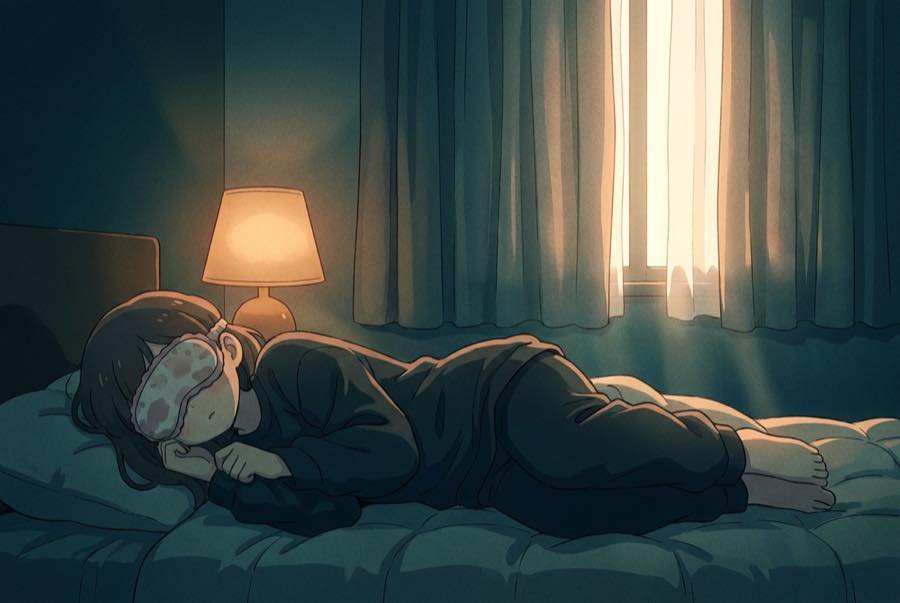
Here is the verdict before the explanation, because it saves you an hour of trying the wrong things: no sound, no app, and no trick of breathing makes light stop being light. Anyone asking how to sleep in a bright room is really asking two separate questions, and only one of them has a soft answer. The light has to be handled physically — fabric, tape, a mask over your eyes. What's left after that, the noise and the alertness and the sense that the day is still running, is where a steady sound genuinely earns its place. Do it in that order and the night usually gets much better. Do it in reverse and you spend the night with headphones on, still squinting.
Why light is the signal you can't argue with
Of everything in a bedroom, light is the piece your body reads most literally. Sleep Foundation guidance on the sleep environment comes back to the same short list every time — dark, cool, quiet — and dark is listed first for a reason. A room that's still delivering daylight is making a continuous, wordless case that the day isn't finished, and no amount of deciding otherwise overrides it.
It also matters that light doesn't have to be dramatic to be a problem. Full sun through a thin curtain is obvious. The version that actually ruins more nights is subtler: a streetlight parked outside the window, a security lamp that clicks on when a cat crosses the drive, the pale blue rectangle of a monitor left in standby, the strip of hallway glow under the door. Individually, none of them feel bright. Together they turn a room into somewhere your eyes never quite give up.
And the people who end up searching for this rarely have an easy fix available. Day sleepers after a night shift. Anyone north enough that summer barely gets dark. Renters with a curtain rail that came with the flat. Someone in a shared room where the other person is still reading. The advice that starts with "install blackout blinds" is correct and often useless in the moment, so the list below runs from what you can do tonight up to what's worth doing this month.
How to sleep in a bright room: the light, cheapest fix first
An eye mask, before anything else. It's the smallest amount of money and effort for the largest single improvement, and it works in rooms you have no control over at all — hostels, hotels, a sofa at your parents' house, a hospital ward. Look for a contoured one with cups over the eye sockets, so nothing presses on your eyelids and you can open your eyes underneath it. Set the strap snug enough that it survives you rolling over; a mask that slides off at 3am has only postponed the problem.
Tape the little lights. A roll of black electrical tape over the standby dots on the TV, the router, the smoke alarm, the charging brick, the air purifier. A sock over anything with a display. Chargers and adapters moved out from behind the bed and onto the far side of the room. This takes ten minutes once and pays out every night afterward, and most people are surprised how many small light sources a bedroom is quietly hosting.
Close the gap the curtain leaves. Most curtains fail at the edges rather than in the middle. Clip the two panels together where they meet with the clamps from a pants hanger or a couple of clothespins. If the rail is narrower than the window, light will always spill down the sides — moving the rail wider and higher than the frame does more than buying heavier fabric.
Then go properly blackout if the room is yours. A blackout curtain or, better, a blind mounted so it overlaps the window frame rather than sitting inside it. If you rent, removable blackout film or a stick-on panel does most of the job without a drill, and for a bad week, cardboard cut to the pane and taped in place is not elegant but it is genuinely dark. Nobody sees your bedroom at 2pm.
Deal with the screens last, and deliberately. In an already-bright room, the phone is usually the brightest thing in it and the closest to your face. Put it face down, out of arm's reach, on a charger across the room. If you need it as an alarm, it can be an alarm from over there.
Get the bright light at the other end. Light isn't the enemy; light at the wrong hour is. On waking, open everything and get outside if you can — that's the same signal working in your favor, and it makes the dark room easier to fall into next time. If you're doing this on a shift pattern, the full daytime version is in how to sleep after a night shift.
The room you're not allowed to change
Sometimes the light isn't yours to switch off. A partner is reading, a roommate studies late, a child needs a nightlight, a hospital corridor never goes dark. In those rooms, the eye mask stops being a nice extra and becomes the whole strategy.
The rest is angles and negotiation. Turn the pillow end away from the light source, or sleep facing the wall, so the glow arrives on the back of your head instead of your face. Ask for a low lamp aimed at the page instead of the overhead light — most people say yes immediately, because nobody actually wants the ceiling light on at midnight either. Warmer, lower, and pointed away beats bright and overhead, even when the total amount of light barely changes.
What sound can do once the light is handled
A bright room is almost never only bright. It's bright because it's daytime, or because a street is awake outside it, and that same street comes with vans, voices, and doors. A steady sound raises the floor of the room so those spikes have less contrast to cut through, which is the whole mechanism, explained properly in why rain sounds help sleep.
There's a second, softer thing worth knowing about. In a room your eyes keep reading as daytime, an ambience that unmistakably belongs to the night gives you one consistent signal pointing the other way — crickets keeping time, water somewhere off in the dark, air moving through leaves. Many sleepers find that easier to settle into than a mechanical hum when the room itself looks like noon. That's the reason Forest, River and Night Nature is our pick for bright-room nights specifically: it is unmistakably after-dark ambience, so it argues with the window rather than agreeing with it. The recordings are edited to run on into one another — put it on repeat and clear any sleep timer, because in a bright room the light is still making its case long after a timer would have given up. The longer tour of the family is in night sounds for sleep, and what a recording has to do before it goes in a playlist is in what makes a rain sound work.
Decide the volume before the mask goes on rather than through fabric afterwards: loud enough that the street outside loses its edges, quiet enough that your alarm and your door still reach you. And if night ambience isn't your texture, the other families are in the guide library.
The short version
Put on a contoured eye mask tonight, and treat it as equipment rather than a last resort. Tape over every standby light in the room and move the chargers away from the bed. Clip the curtain panels shut where they meet, and if the rail is narrower than the window, move the rail rather than buying thicker fabric. When the room is yours to change, mount a blackout blind so it overlaps the frame; when you rent, removable film or a taped panel gets you most of the way. Turn the bed away from whatever light you can't switch off, and ask for a low, aimed lamp instead of the overhead. Phone face down, across the room. Then start a steady night sound at a volume you picked on purpose, and leave it running until morning.
This article is for general information and isn't medical advice. If sleep problems persist, talk to your doctor.