Half the bed hasn't been slept in for days, and the sheets on that side are still tucked the way they were left. The daytime is survivable — work, errands, someone to text, a hundred small things asking to be done — and then the lights go off and there is nothing standing between you and the whole of it. If you've been searching how to sleep after a breakup, you already know the nights are a separate problem from the days, and that most sleep advice seems written for a life that isn't currently in pieces.
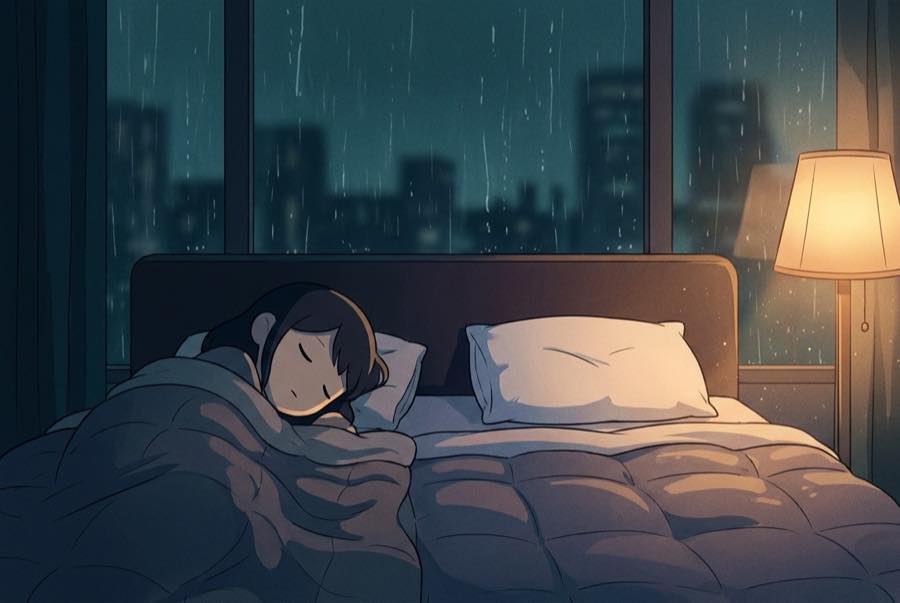
This page has nothing to say about the relationship. It's about the nights themselves, and how to make them a little less hostile.
The replay has a specific face
Ordinary insomnia hands you a vague swirl — work, money, the thing you said in a meeting. This is not that. What arrives when the lights go off is one particular person, in high definition, saying one particular set of things.
You get the last conversation. Then the earlier one that should have gone differently. Then the sentence you have now rehearsed a dozen ways, each version sharper than the last, none of which you will ever say out loud to anybody. Somewhere around the fourth pass you notice you are not remembering anymore, you are drafting — building a case for a hearing that is not scheduled. It doesn't feel like thinking. It feels like being handed the same footage over and over by something that won't accept that the edit is finished.
Willpower is no use against that, but two things genuinely help.
Keep paper by the bed. When the loop starts, write the thought down — badly, in fragments, whatever comes out. Not journaling, not processing. Just moving the line out of rotation so your mind stops holding it up for review. Some nights that is two lines and some nights it is a page, and the page is fine.
Then let the version you were drafting stay unfinished. Part of what keeps the loop running is that you keep trying to land it: to find the sentence that would have worked, or the exact moment it turned. There isn't one, and hunting for it at 1am is what keeps you awake to hunt for it again at 2am. Getting worse at winning that argument is real progress.
How to sleep after a breakup: make the bed yours
The empty half is the part nobody warns you about. It is a physical fact in the dark, and every night it asks the same question. You don't have to answer it — you can just stop the room from posing it so plainly, and the way to do that is smaller and stranger than redecorating.
Sleep in the middle of the mattress rather than on your side of it. A bed with one empty half is a comparison; a bed you are lying in the centre of is only a bed.
Then change one thing on purpose, as a small act of ownership rather than erasure. Fresh sheets, or a different pillowcase, or the lamp moved to the other nightstand, or the chair turned toward the window. Do it as a decision you are making about your own room, not as a way of getting rid of someone. That distinction is the whole point: people freeze here because moving anything feels like making a statement, and it isn't one. It is a bed, you are the person sleeping in it, and arranging it around that fact is allowed — and undoable later if you ever want it back. If your loss is a bereavement rather than a breakup, the fuller version of this, for when the bed has stopped being a neutral object at all, is in how to sleep when grieving.
The phone at 2am
You already know what the phone is for at 2am. The old messages, scrolled to the good part. The photos. The profile you have promised yourself you would stop checking. And on the worse nights, the draft you might actually send, which at that hour reads as honest and reasonable and by breakfast reads as neither.
This is not weakness, and treating it as a willpower problem guarantees you lose it. The phone is simply the most available thing in a dark room, so the fix is availability, not character. Put it on a charger across the room, one you have to stand up to reach. That is the entire intervention. The decision gets made in the gap between wanting it and holding it, and six feet of cold floor is usually gap enough.
Two smaller notes in the same spirit. If reading in bed helps you drift off, use paper or an e-reader with no browser on it, so the reaching hand finds something harmless. And if lying there has turned into a standoff, get up rather than grinding it out in a bed that already carries enough associations this week — how to fall back asleep covers how and why.
The first week is its own weather
The first week does not behave, and knowing that in advance stops you reading it as a verdict on how you are coping.
You may barely sleep for two nights and then sleep eleven hours and wake up feeling worse. You may be wide awake at four with total clarity and flattened at three in the afternoon. Appetite goes strange. You may cry at something trivial and stay completely dry-eyed at the thing you expected to break you. Some people sleep far more than usual rather than less — that is the same phenomenon wearing different clothes, not the opposite problem.
None of it moves in a line. The good nights arrive before you trust them: you will get one decent stretch, decide it is over, and be back at 3am the following night wondering what you did wrong. Nothing. This settles unevenly across weeks, and the unevenness is the normal shape of it rather than a setback.
One unglamorous anchor is worth keeping through all of it — a roughly steady wake time and daylight on your face early, which how to sleep when grieving makes the full case for, alongside the notes on nightcaps and long evening naps that apply here just as squarely. Sleep comes back to meet a steady morning long before it responds to an earlier bedtime.
Something to listen to instead
Silence is where the replay gets loudest. An empty room hands your attention a clear stage and exactly one thing to put on it, so the useful move is to give it something else to be about.
For these particular nights we would point you at waves rather than rain, for one reason: ocean is slower than almost anything else we curate. A long approach, a break, a long drag back out — closer to breathing than to weather, and slow enough that following it takes up the attention the replay wants. It also doesn't ask you to feel any particular way about it, which is more than can be said for most comfort in week one. Ocean Waves for Deep Relaxation is a deep pool of exactly that, every track picked to stay level with nothing in it that swells or startles. Leave it looping so nothing changes at 3am, and keep it low — sitting under the room rather than on top of it. The checklist we curate against is in what makes a sleep sound work, and the reason a steady sound helps at all is explained properly in why rain sounds help sleep.
The honest part
Sound masks and keeps company. It doesn't touch the reason you are awake, and anyone promising otherwise is selling something. What actually moves this is time, and the first night you sleep straight through you may not even notice it happened.
There's a line worth watching for, too. If weeks pass and the sleeplessness isn't easing, or you're not eating, or the mornings arrive with a heaviness that doesn't lift by afternoon, or the thoughts turn dark — please talk to a doctor. Sleep that stays broken after a loss is something they see often and take seriously, and asking for help with it is not an overreaction.
If the nights feel less like heartbreak and more like being the only person awake in the world, how to sleep when lonely is the closer fit. Everything else we've written lives in the guide library.
For tonight
Tonight doesn't have to be repaired, only gotten through. Phone across the room, paper by the bed, you in the middle of the mattress. Put on Ocean Waves for Deep Relaxation, leave it looping, and let the tide keep watch until morning.
This article is for general information and isn't medical advice. If sleep problems persist, talk to your doctor.