There's a kind of sleep that seems to live only at the coast — the open window, the water somewhere below, the way the night arrives without being chased. Beach sounds for sleeping can carry more of that home than you'd expect. Not the whole holiday — we won't pretend a recording is a coastline — but the part your ears remember, which turns out to matter more at bedtime than you might think.
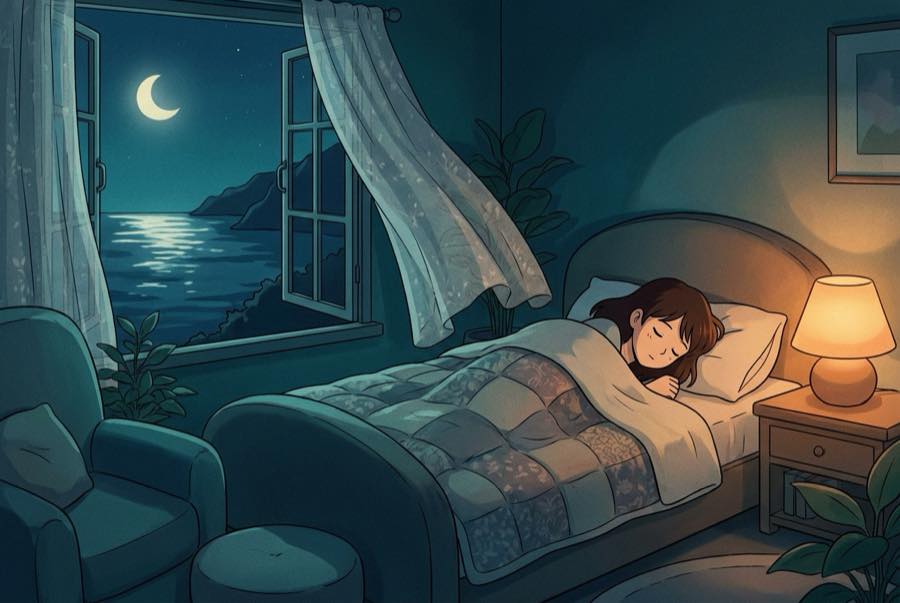
That's what this playlist was curated for.
Falling Asleep by the Sea — slow, steady coastal sound, hand-picked and sequenced to hand off cleanly. Set it to repeat before lights out; no playlist lasts the night unless it starts over instead of ending in silence, and repeat is the whole mechanism.
Below is the longer answer: why familiar coastal sound works as a bedtime cue, what separates a sleepable beach recording from a dramatic one, and when the sea honestly isn't your sound.
Why beach sounds for sleeping work: the holiday-memory effect
Think about the nights you've actually slept by the sea. You weren't trying. The sound was there when you got into bed, it was there when you woke briefly in the dark, and by the second or third night your body had quietly filed it under safe to sleep now.
That filing is the useful part. Sleep runs heavily on association — the same reason a familiar pillow helps and a strange hotel room doesn't. When a sound has only ever accompanied rest, hearing it again tells your body what comes next, before your thinking mind gets a vote. Many sleepers find that a sound tied to a good memory settles them faster than a technically perfect one, and coastal sound tends to be tied to the best sleep memories people have: holidays, childhood summers, the one week a year the to-do list stayed home.
There's a plainer layer underneath the memory, too: like rain, steady water masks the small noises that would otherwise spike against silence and pull you awake — the full explanation lives in why rain sounds help you sleep. But with beach sound, masking is only half the story. The other half is that your body already knows this sound, and already knows what it means.
Not every beach recording is a sleep recording
Here's the caveat we'd rather give you now than let you discover at 2am: the sea is not automatically steady. Big surf comes in sets — a run of heavy crashes, then a lull, then another run — and each crash lands as a small event a sleeping brain feels obliged to check. A dramatic beach recording is wonderful for a film and wrong for a bedroom.
So when we curate for sleep, we listen through every track before it earns a place and hold it to one bar — slow, regular waves the whole way through, no rogue crashes, no fade-outs, and a seamless loop so the tide never appears to stop — the full reasoning behind those checks lives in what makes a rain sound work.
The tracks in Falling Asleep by the Sea cleared that bar. What's left is the gentle end of the coast: water arriving and withdrawing at roughly the pace of slow breathing, close enough to feel present, calm enough to disappear behind. If you want the deeper comparison of wave rhythm and how it suits different sleepers, that's in ocean sounds for sleeping.
How to make it a bedtime cue
The holiday-memory effect gets stronger when you treat the sound like a ritual rather than a remedy.
Use the same playlist nightly for a week. Association builds through repetition. Give your body a run of nights where this exact shoreline means bed, and it starts doing some of the work for you.
Start it before you need it. Press play while you're brushing your teeth, not after twenty minutes of staring at the ceiling. The cue should belong to winding down, not to failing to sleep.
Set the volume once, low. Quiet enough to talk over, present enough to notice when you listen for it. Then leave it — you shouldn't touch a bright screen again tonight.
Repeat on, always. Say it once more, because it's the step people skip: even the loveliest stretch of shoreline will end mid-night unless the playlist starts over. The abrupt silence afterward can wake you more surely than any noise.
If the sea isn't your sound
The goal was never the sea — it's the sleep. Some people find any water sound makes them restless, or the beach carries memories that aren't restful at all. If that's you, the sea isn't broken and neither are you — try the stiller end of the spectrum instead: crickets, low night air, and quiet ambience in night sounds for sleep, or browse the other sound families in the full library.
Tonight
Same shoreline, low volume, repeat on, started before your head hits the pillow. Let the tide do what it did on holiday.
Falling Asleep by the Sea — set it to repeat, put the phone face down, and let the water bring the week back.
This article is for general information and isn't medical advice. If sleep problems persist, talk to your doctor.