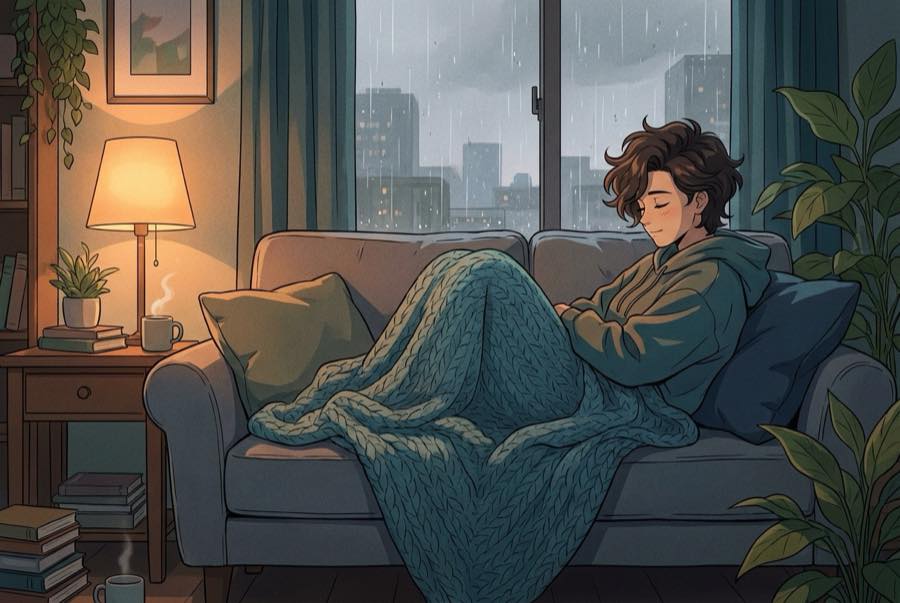
It's the middle of the day, you're running on fumes, and there's a small window — half an hour, maybe a little more — before life starts back up. A nap would fix a lot, if you could just get under. Rain sounds for napping are a slightly different job than rain for the night: you need to drop off quickly in a bright, noisy world, and you need to surface again without feeling like you were hauled out of a well. Gentle rain, set up the right way, does both.
Play Gentle Rain — No Thunder, No Surprises — soft, steady rain, hand-picked and sequenced to hand off cleanly. Nothing swells, nothing cracks, nothing fades out underneath you. Set it to repeat and the rain holds until you decide to stop it.
The rest of this page is the setup: why daytime rest asks for a different sound than nighttime sleep, how to choose between a timer and repeat, and how to keep a twenty-minute nap from turning into a groggy two-hour one.
Why rain sounds for napping are a different job
Night sleep and naps fail in different ways. At night, the enemy is the long haul — a recording that shifts or stops at 3am and pulls you awake. A nap has the opposite problem: the world around you is fully awake. Dishwashers, coworkers, delivery vans, a household going about its afternoon. You're trying to sleep inside the noisiest hours of the day, usually with light leaking around the curtains.
That's where rain earns its place. Steady rain works by masking — it raises the sound floor so the spikes around you stand out less, and the full explanation of how that helps lives in why rain sounds help sleep. For a nap, that masking matters even more than at midnight, because there's simply more happening around you to mask.
But a nap also asks for less depth. You're not trying to sink to the bottom of the night; you're trying to rest near the surface and come back up on schedule. A heavy downpour can feel like more weather than a bright room calls for. Gentle rain sits at the right intensity: present enough to cover the afternoon, soft enough that your alarm doesn't have to fight through it — and soft enough that waking from it feels like stepping out from under an awning, not being shaken.
Timer or repeat: set the nap up before you lie down
This is the one decision to make before your head touches the pillow, so you're not negotiating with your phone once you're drowsy.
If your nap is short — twenty to thirty minutes — keep the setup simple. Set Gentle Rain — No Thunder, No Surprises to repeat and it covers the whole rest with room to spare. Press play, set your alarm, put the phone face down. The rain will still be going when the alarm sounds, which is exactly what you want: waking into rain is gentler than waking into sudden silence.
If you have a longer window, repeat matters even more. A generous rest can outlast a single pass of any playlist, and one that ends mid-nap leaves a pocket of silence that can wake you early. Repeat closes that gap — the playlist is sequenced to hand off cleanly, so the loop point won't register.
Either way, let the alarm end the nap, not the rain. A sleep timer that cuts the sound is tempting, but the moment the rain disappears is itself a change, and changes are what wake you. Keep the rain running until you're up. Then stop it yourself, standing, with the kettle on.
One more honest note on length: keeping daytime naps short is the standard advice — around twenty minutes is the number most sleep guidance lands on for waking up refreshed rather than groggy, and many sleepers find that long or late-afternoon naps make the night harder. If you know a deep afternoon sleep wrecks your evening, set the alarm before you're sleepy enough to argue with it.
Gentle rain, curated for daylight rest
We listen through every track before it earns a place in this playlist, holding each one to the same steady, fade-free, loopable standard we apply across the catalog — the full checklist lives in what makes a rain sound work.
For a napping playlist we hold the line even harder on steadiness. At night you might sleep through a brief shift in the rain; twenty minutes below the surface, you won't. Everything here is soft-textured rain with no thunder anywhere — if a distant rumble is part of what you love at night, that's a different mood for a different hour.
If this softer register is your sound after dark too, the nighttime version of this setup is in gentle rain sounds for sleeping. And if nights are where your real sleep trouble lives, start with the fuller guide to rain sounds for sleeping — the method changes when the goal is morning.
When a nap isn't the fix
A nap is a patch, and patches are honest work — but if you need one every single day to function, or you're exhausted no matter how you slept, that's a sign the nights deserve the attention, not just the afternoons. Rain can make a half hour of rest easier to reach; it can't stand in for the sleep your nights should be giving you, and we won't pretend otherwise. There are more sounds to try for those nights in the full library.
This afternoon, then
Find the darkest corner you have, set the alarm first, and start the rain — soft, steady, no surprises.
Play Gentle Rain — No Thunder, No Surprises — follow it so it's ready the next time the afternoon runs you down.
Half an hour from now, you'll be glad you lay down.
This article is for general information and isn't medical advice. If sleep problems persist, talk to your doctor.