The verdict first, because it saves you the rest of the internet: the worrying is costing you more than the missing hours are. Most people searching how to stop worrying about not sleeping arrive braced for another hygiene list — cooler room, earlier caffeine cutoff, no screens after nine. Those things are fine, and they are not what's wrong. What's wrong is that sleep has quietly become something you're graded on every single night, and grading yourself is an alert, effortful, wide-awake activity. Nobody has ever drifted off in the middle of checking whether they're drifting off.
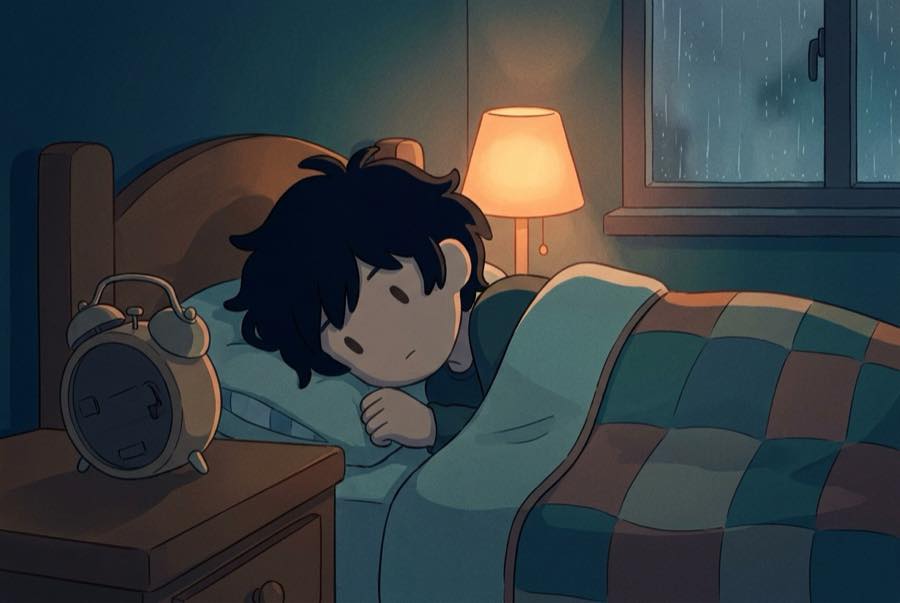
The loop, named plainly
It usually starts with a legitimate bad night. Then a hard day follows it, and the connection gets filed away. The next evening, bed isn't just bed anymore — it's a test with a result in the morning. You lie down slightly braced. Braced is not a state sleep happens in, so it takes longer. Now you have evidence, and the evidence makes tomorrow night's bracing more reasonable.
That's the whole trap, and notice what's cruel about it: the worry isn't irrational. Sleep does matter. Tomorrow does matter. You are not being silly, which is exactly why the usual reassurance bounces off. Telling an anxious sleeper don't worry about it is like telling someone to stop noticing a sound.
Notice, too, where the fear actually lives. It's rarely about sleep itself. It's about the consequences — the meeting you'll fumble, the patience you won't have with your kids, the drive home at the end of a wrecked day. The nights get worse because the stakes keep climbing, so that's the lever: not more effort at falling asleep, but less riding on whether you do.
How to stop worrying about not sleeping: lower what tonight has to achieve
Do this part while the light is still on. It's a decision, not a technique, and it works better made in advance than improvised at 1am.
Plan the bad version of tomorrow. Worry runs unopposed when the feared outcome stays vague. So make it concrete and boring: if tonight goes badly, which single thing gets moved or dropped? What's the low-effort lunch? What time does the coffee come? Write two lines on paper. A feared day with a plan attached loses most of its charge, and the part of you that keeps rehearsing disaster tends to quiet down once it sees the disaster is handled.
Give up the target on purpose. Tonight's goal is not sleep. Tonight's goal is lying down in a dark room, warm, with nothing required of you. Rest is genuinely worth something even when sleep doesn't arrive, and — this is the annoying part — releasing the target is often what lets sleep in sideways. You cannot fake this, which is why the plan above matters. You're not pretending sleep doesn't count; you're arranging things so tonight isn't carrying so much.
Stop researching it in bed. Reading about sleep at midnight is the same activity as worrying about sleep, in a more respectable outfit. If you want to change the shape of your evenings rather than tonight, that's a real project with its own page: how to stop overthinking at night. Do it tomorrow, in daylight.
Take the clock out of the room
Clock-watching is the engine room of this particular worry. Every glance produces a number, every number produces arithmetic — five and a half hours left, now five, now I'll be useless — and arithmetic is not a drowsy activity. It also gives the loop fresh evidence on the hour.
So remove the input. Turn the display to the wall, or put a book in front of it. Phone face down, out of reach, alarm already set so you don't need to check that it's set. If you use your phone for sound, start it before lights out and then leave it alone for the night.
It helps to know what you'd be measuring anyway. Most adults take a while to fall asleep, and the wait you're calling a failure is often an ordinary one — the actual numbers are in how long does it take to fall asleep. Reading that once, in the afternoon, takes more heat out of 1am than any amount of lying there estimating.
Redefine a good night
Ask most anxious sleepers what a good night looks like and you'll get something no human body actually does: asleep within minutes, unconscious straight through, awake before the alarm feeling refreshed. Measured against that, nearly every night fails, and a nightly failure is a reliable way to manufacture dread.
A fairer definition: you went to bed at a sane hour, you were mostly asleep, you woke a couple of times and don't remember much about it, and you got through the day. Brief wakes are ordinary. Turning over, noticing the room, drifting back — that's normal sleep, not a defect, and it only becomes a problem when you start logging each one as a fault.
Judge yourself by the week, not the night. One thin night inside a decent week means very little. It's the standing pattern that's worth attention, and patterns are invisible from inside a single bad Tuesday.
Give the waiting something to follow
Here's the practical middle ground. You can't order your mind to stop monitoring, but you can hand its attention something duller than itself. A steady, unchanging sound does that, and it does a second job at the same time — it covers the small noises that would otherwise give a watchful mind something new to file (that's the whole mechanism, explained properly in why rain sounds help sleep).
What matters tonight is the kind of sound. Anything that swells, dips, or stops hands you a fresh event just as you were loosening, and an anxious sleeper will catch every one. We curate Rain for Anxious Evenings for exactly this — low, even rain with no surprises in it, chosen against the checks in what makes a rain sound work. Set it to repeat and keep the volume low, quiet enough to sit under the room rather than fill it, and it holds until your alarm. Start it while you're brushing your teeth, not at lights out, so it belongs to the evening rather than being one more thing you're doing to try to sleep. Other sound families are in the full guide library if rain isn't yours — but pick tonight's before you get in bed and then stop shopping.
Be honest with yourself about what this is. Sound can make an unsleeping hour considerably less unpleasant; it isn't a switch, and expecting it to be one just adds another way for the night to fail.
When the worry outgrows the night
If you've been lying there long enough that the bed is starting to feel like an argument you're losing, get up. NHS guidance says much the same thing: leave the bed, keep the lights low, do something undemanding and dull, and go back when you feel heavy. It protects the association — you want your bed to mean sleep, not the place where you fight.
And the plain version, because you deserve it rather than another tip: if the dread now starts in the afternoon, if bedtime has become something you approach with a knot in your stomach, or if this has been the shape of most nights for months, that's a pattern doctors recognize, and there is help for it — bring the worrying to them, not just the not-sleeping. A playlist and a calmer evening can carry a rough patch. They aren't treatment, and we'd rather say so.
Tonight, in order: write the two lines about tomorrow while the light is on, turn the clock to the wall, put the phone face down out of reach with the alarm already set, start your sound before you get in, and decide that quiet rest counts. If you're still awake and it's turning into a fight, get up, keep the lights low, and come back when your eyes are heavy. Then judge the week, not the night.
This article is for general information and isn't medical advice. If sleep problems persist, talk to your doctor.