A hospital at night is never fully dark and never fully quiet. A pump chirps down the hall, a cart rolls past on hard floors, a door swings, and every couple of hours a light comes on because someone needs a reading or a bag changed. Anyone looking up how to sleep in a hospital — from the bed or from the chair beside it — deserves the honest starting point first: almost nobody sleeps well in one, and that is not a personal failure. The building runs around the clock because that is what keeps people safe, and safe and quiet were never the same thing. What is left to you is a small, real list of things you can still control.
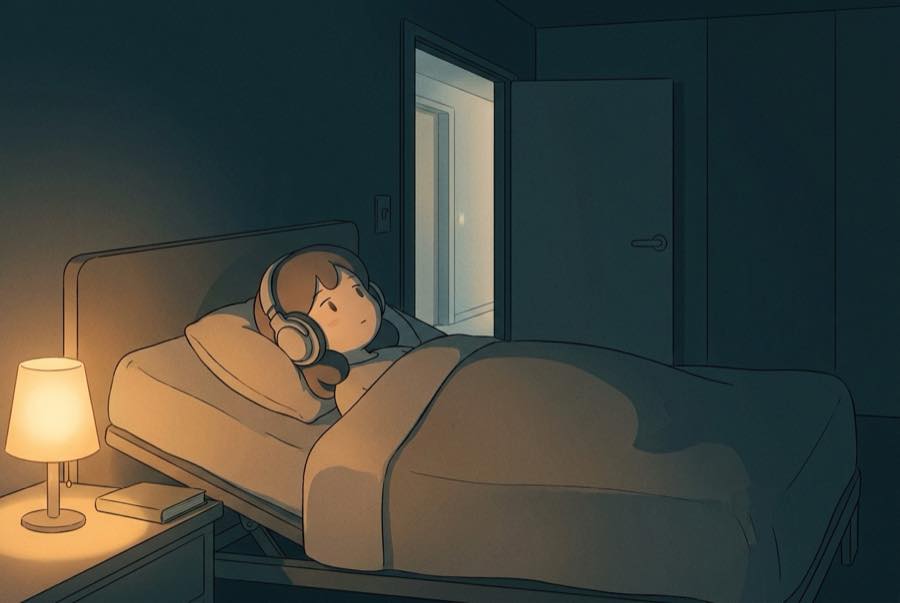
Hospital sleep is borrowed, not banked
The first thing that helps is lowering the target. A night here is rarely one long stretch; it is a handful of shorter pieces stitched around checks, medication rounds, and whatever is happening in the next bay. If you go in expecting eight unbroken hours, every interruption lands as a small defeat, and the frustration keeps you awake longer than the interruption did.
Aim instead for rest between the interruptions. Lying still with your eyes closed in a dim room is not nothing, even when sleep does not arrive. Dozing counts. A ninety-minute stretch counts. Taking the daytime nap the ward's quiet hour allows you counts, especially if the night is going to be broken anyway. Rest here is borrowed in pieces, and pieces are worth collecting.
It also helps to know that this is temporary. Sleep in an unfamiliar, watched-over room tends to be lighter for almost everyone, and it usually improves once you are home in your own bed with your own noises around you.
How to sleep in a hospital room: the parts you control
Not much of the room is yours, but a few things are, and they are worth setting up in the evening rather than at 2am.
Light, at the edges. Wards keep a working level of light on for a reason, and it is not yours to switch off. An eye mask solves the part that is yours — it turns a permanently half-lit room into a dark one without changing anything the staff need. Many units keep spare masks and foam earplugs; it costs nothing to ask.
Your own pillow or blanket, if allowed. Some wards are fine with a small item from home, some are not, so ask before someone brings one in. Familiar fabric against your face is a surprisingly strong signal to a body that has spent all day in an unfamiliar place.
The bed position, set before the lights go down. Ask whoever is on the evening shift to put you the way you will want to be for the night, rather than getting settled and then calling someone back to change it. Say what would be comfortable — flatter, more upright, a pillow behind one shoulder — and let them decide what is right for you and do it.
Your phone, face down and dim. Screens are the one bright thing in the room that you fully control. Set the alarm you need, then put it down. Late scrolling in a hospital bed has a way of turning into late worrying.
Water within reach. Waking up thirsty and having to call for help is a small interruption that a cup on the table prevents.
Ask about timing — the one conversation worth having
The most useful thing you can do is talk to the staff on the evening shift. Not to change your care, but to understand the shape of the night: when the next set of observations is due, whether anything is scheduled at a specific hour, whether the light over your bed has to be on for it. Knowing that someone will be in around midnight and again at four is far easier to sleep through than being surprised twice.
It is also fine to say plainly that you are struggling to sleep. Nurses hear it every night and often know what the ward can flex — a different bay, a curtain pulled differently, a check that can be grouped with another one. Ask, and then leave the decision with them. Nothing attached to you, and nothing plugged in around you, is yours to adjust, quiet, or unplug — alarms exist so that people come when they are needed, and a silenced one helps nobody.
Headphones, an eye mask, and a sound that stays the same
Sound is the piece you can genuinely bring with you. A hospital's noise is mostly sharp and sudden against a low background — an alarm, a raised voice, a trolley on a hard floor — and a steady sound of your own raises that background so the spikes have less distance to travel. That is the whole of the idea, and the longer version is in why rain sounds help sleep.
For a room full of electronic tones, a flat hum tends to sit better than anything with weather in it. Nothing in it rises or falls, so nothing in it can be momentarily mistaken for a machine changing its mind — which is what a wave or a swell of rain will do to you at 3am in a ward. Fan Sounds for Sleep — Steady Hum is low and unchanging in exactly that way. The tracks are cut so one runs into the next without a gap; set it to repeat and switch off any sleep timer, rather than having it stop by itself and leave the bay suddenly audible again. If a flat hum is not your sound, the other families are gathered in the guide library.
Volume matters more here than anywhere else, and the rule is different from the one at home. It has to stay low enough that you can hear someone speaking to you, that staff can wake you easily, and that you are not sealed off from the room. Err quieter than you would in your own bedroom: the aim is to take the edge off the ward, not to remove it. What volume for sleep sounds covers where that line usually sits.
Headphones are usually the right call in a shared bay, since a speaker is your neighbor's problem too. Soft, flat earbuds or a headband style survive side-sleeping better than hard ones. If you have lines, leads, or a cannula, keep the cable clear of them and check with your nurse before you settle in with anything over both ears — they may need to reach you quickly. The comfort and safety tradeoffs are covered in headphones or a speaker for sleep, and the general tactics for sleeping through a loud building carry over from how to sleep in a noisy apartment.
If you are the one in the chair
Sleeping beside someone is its own kind of tired. You are half-awake by choice, listening for a change in their breathing or a nurse coming in, and that watchfulness does not switch off just because the lights are low.
A few things help. Ask whether a recliner is available instead of the upright chair; on many wards there is one somewhere. Bring a proper layer, because visitor chairs are always colder than they look at 9pm. Take the shift you can actually take — if there is another family member, split the night rather than staying up through all of it. Eat something in the evening; an empty stomach makes a long night harder. And use one earbud rather than two, so the room stays audible to you.
Say plainly to the staff that you are staying and would like to rest, and ask what is workable. They deal with families every night, and it is easier for everyone if they know you are asleep in the corner rather than assuming the chair is empty.
When it is not a sleep problem
Some of what keeps people awake in a hospital is not sleeplessness at all. Pain that will not settle, breathlessness, nausea, a new symptom, or fear that has climbed past the point where anything calms it — none of those are things to lie quietly through until morning, and none of them are things a sound can help. That is what the call button is for, and using it at 3am is not a bother. Say what is happening and let the people trained for it decide what comes next.
And if sleep is still coming apart weeks after you are home, that is worth raising with your doctor rather than waiting it out. Disrupted sleep after a hospital stay is common and usually settles, but a stretch that does not settle is worth a proper conversation.
The short list
Ask the evening staff what is scheduled overnight and whether anything can be grouped. Ask whether the ward has an eye mask and earplugs. Ask for the bed position you will want before the lights go down, and sort out eye mask, water, and phone while you are still awake. Keep any sound low enough to hear the room, on headphones in a shared bay. Leave every alarm, line, and machine exactly as staff set it, and press the call button for anything that hurts or frightens you. Then take the rest in whatever pieces the night gives you, and top it up during the quiet hour tomorrow.
This article is for general information and isn't medical advice. If sleep problems persist, talk to your doctor.