A dorm room is one room running two timetables. Yours ends at eleven; the person four feet away is starting a group call at one, and the hallway is a third timetable nobody signed off on. If you're looking for how to sleep in a dorm room without becoming the resident complainer, the honest answer has three parts: one conversation, a handful of cheap fixes, and a sound dense enough to cover what's left. None of it requires your roommate to change who they are, which is the only reason any of it works.
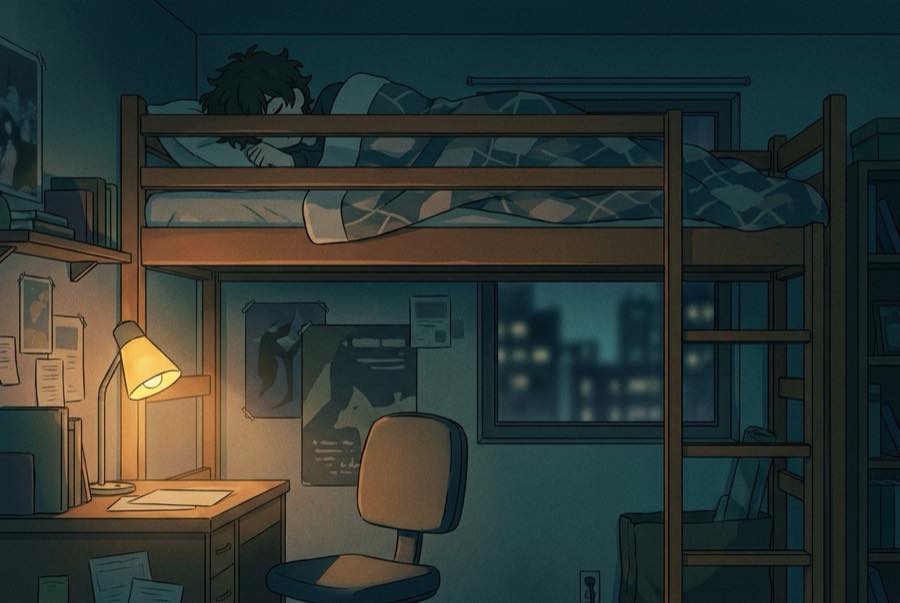
Why dorm nights are hard even when nobody is being loud
The problem usually isn't volume. It's that dorm noise arrives in pieces — a door, a laugh in the corridor, a drawer, a chair scraped back, a phone buzzing on a desk. Steady background sound your brain writes off after a minute; sudden ones it checks. A room where something might happen at any moment keeps a small part of you on duty all night, which is why you can be exhausted at midnight and still awake at one.
Add the schedule mismatch and it compounds. Even a considerate roommate has to come in, undress, brush their teeth, and charge things. Every one of those is a small event landing in a quiet room. The goal isn't a silent room — you will not get one. The goal is a room where the events you can prevent have already been prevented, and where the ones you can't have stopped being the only thing happening.
Have the etiquette conversation early, and make it specific
The single highest-leverage thing in a shared room is a five-minute conversation held in daylight, before anything has gone wrong. Once you're annoyed at 1am, everything you say sounds like an accusation, and the other person defends instead of adjusts.
Keep it concrete. Vague requests ("could you be quieter at night") give the other person nothing to act on and quietly cast them as the problem. Specific ones are easy to say yes to:
- "Can we call it lights-out at midnight on weeknights? After that, headphones and the desk lamp instead of the ceiling light."
- "If you come in after I'm asleep, could you leave your bag packed by the door and get ready in the hall bathroom?"
- "I'm up at 6:30 — I'll take my clothes out the night before so I'm not opening drawers."
Notice the shape of those: you give something first. The trade matters more than the rule, because you are also the noisy one at hours that don't suit them. Offering your own concession makes it a shared arrangement rather than a set of demands, and it makes the follow-up conversation possible when the agreement slips — which it will, around week three, and again around finals.
If your roommate keeps a genuinely different clock — night shift, late labs, a partner who visits — stop negotiating the schedule and negotiate the room instead. Lamp instead of overhead light. Headphones after midnight, no speaker. Getting ready outside the room after lights out. That set holds up even when neither of you is at your best.
Cheap fixes that do most of the work
Dorm improvements have to be reversible and cost about nothing. These are the ones that pay for themselves the first week:
An eye mask. Rooms shared by two schedules mean light at wrong hours, and dorm windows almost never have a real blackout option. A mask solves in one purchase what a curtain argument never will.
Something under the door. A rolled towel or a cheap door sweep cuts the corridor down noticeably — hallway sound mostly comes in through that gap, not the walls.
A clip lamp for each of you. The overhead light is the real offender in most late-night incidents. Two small pools of light let one person be awake without waking the other.
Move the bed if you can. A few feet away from the door, or a bookshelf between the bed and the room's traffic, changes what reaches your pillow. If you're in a bunk, a cheap curtain or a sheet clipped along the rail makes the bed a smaller, darker place.
Felt pads and a rug. Chair legs and floor traffic account for a surprising share of the noise in a room with hard floors.
Foam earplugs, kept by the bed. They're worth trying, though most people find them uncomfortable side-sleeping and they mute your alarm too — which is why sound usually beats silence in a dorm.
How to sleep in a dorm room when you can't control the noise
At some point the fixes run out and there's still a party two doors down. This is where a steady, dense sound earns its place: it raises the floor of the room so the door, the laugh, and the bass have less contrast to cut through — the mechanism is explained properly in why rain sounds help sleep.
For a dorm specifically, go heavier than you would at home. Gentle rain is lovely in a quiet bedroom and hopeless against a corridor at midnight; you want something with real body to it. That's what we reach for here: Heavy Rain — Full Downpour — a deep pool of thick, drumming rain, chosen because it has enough weight to sit over hallway noise instead of disappearing under it. We check every track in it against the same list before it goes in — nothing that fades, nothing that suddenly thins out halfway — and that list is in what makes a rain sound work. Start it before you get into bed, leave it looping so nothing changes at 3am, and choose the volume once while you're still properly awake.
One thing to get right: loud enough to blur the hallway, quiet enough that you'd still hear a fire alarm or your own alarm. If you find yourself pushing the volume up to chase a specific noise, you're using it wrong — the point is to soften contrast, not to win.
Headphones, without wrecking your neck
In a shared room, headphones are often the only polite option after midnight, and regular earbuds are miserable to sleep on. A flat sleep headband or low-profile buds designed for side-sleeping solve most of that. Go wireless if you can; a cord wrapped around you in a narrow bunk is a genuine nuisance and occasionally worse.
Keep the volume lower than feels necessary — hours of sound at close range is a different thing from a track on the bus, and low is also what lets you hear the room. If you share the room with someone who'd rather have the sound out loud, the negotiation and the middle-ground options are covered in how to sleep when sharing a room. And if the real trouble is the building rather than your roommate — thin walls, street below, the floor above — the tactics in how to sleep in a noisy apartment transfer directly to a residence hall.
What to actually do tonight
Put the towel under the door and the eye mask on the shelf by your pillow. Lay tomorrow's clothes out so you're not opening drawers at 6:30, and ask your roommate for the lamp-instead-of-ceiling-light deal tomorrow in daylight, offering one of your own habits in trade. Get the sound going before you're in bed, at a volume where your alarm still gets through. If you're still awake long after lights-out, slide out quietly and sit at your desk with the lamp low rather than lying there doing arithmetic on how much sleep is left — the rest of that move is in how to fall back asleep. More options for the sound itself are in the guide library.
This article is for general information and isn't medical advice. If sleep problems persist, talk to your doctor.