Maybe you're lying there in a quiet room wondering if some rain would help. Or maybe the rain is already playing and a small voice is asking whether it's actually doing anything. Either way, you've landed on the real question — sleep sounds vs silence — and you deserve a straight answer rather than a sales pitch.
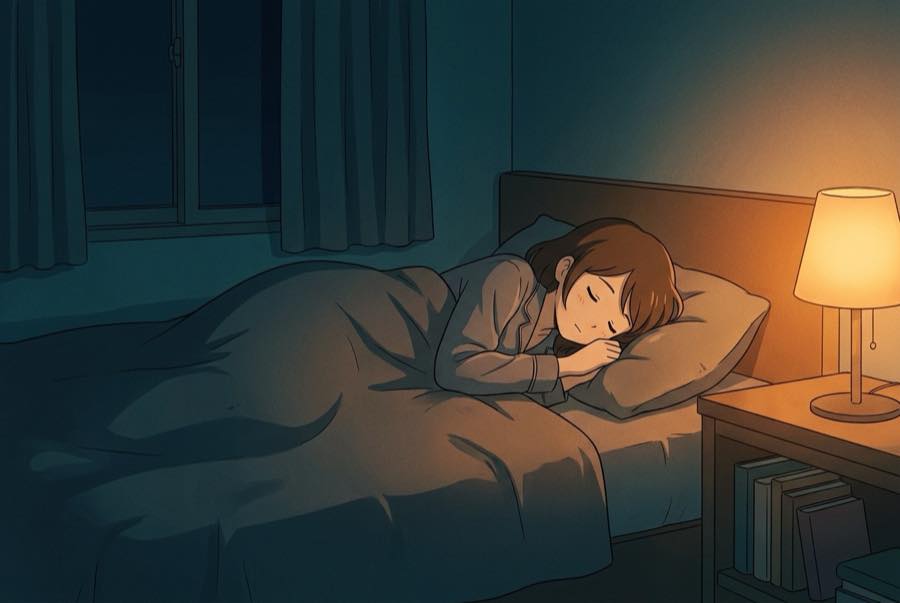
So here it is: neither one wins for everyone. Silence is genuinely the better choice for some sleepers, steady sound is genuinely the better choice for others, and the only reliable way to find out which one you are is to try both for a few nights and keep whichever leaves you more rested. This page walks you through when each side tends to win, and gives you a simple test you can start tonight.
Sleep sounds vs silence: what the honest answer depends on
The question isn't really about sound. It's about your room, and about your head.
Sound earns its keep mainly as a mask — a steady wash that makes sudden noises smaller against the background, which is a longer story we tell properly in why rain sounds help you sleep. That framing matters, because a mask is only useful when there's something to cover.
The research points the same way. A 2021 systematic review by Riedy and colleagues in Sleep Medicine Reviews looked at continuous noise as a sleep aid and found the evidence is mixed overall, with the strongest case where noise covers a disruptive environment. In other words, the science doesn't crown a winner. It says: it depends on what your nights actually sound like.
That's why we won't tell you sound is always the answer. We curate sleep playlists, and even we would rather you sleep in silence than stream something your body doesn't want.
When silence wins
Silence tends to be the better night when most of these are true:
Your room is already genuinely quiet. No traffic, no thin walls, no fridge cycling, no partner turning over every twenty minutes. If nothing is waking you, there's nothing for a sound to mask, and adding one may do nothing — or slightly worse than nothing.
You notice sound rather than sink into it. Some people's attention grabs onto any audio, however gentle. If a playlist becomes one more thing to listen to instead of a background to forget, quiet will serve you better.
You wake when audio changes. If a track ending or a texture shifting tends to surface you, and you've had that experience even with well-made recordings, your nervous system may simply prefer a still room.
You sleep fine as you are. This one gets skipped surprisingly often. If you fall asleep easily in silence and stay asleep, there is nothing to fix. Don't add a habit you don't need.
When sound wins
Steady sound tends to be the better night when your quiet isn't actually quiet:
Your environment is noisy or unpredictable. City streets, hallway doors, a snoring partner, summer windows open. Many sleepers in noisy rooms find a constant, unchanging sound helps them fall asleep and stay asleep, because the disruptions stop standing out so sharply.
Your head is the noisy room. Plenty of people reach for rain not to cover traffic but to quiet a racing mind. A steady sound can work like a handrail for attention on nights when thoughts won't queue politely.
Silence itself feels loud. For some sleepers, a perfectly still room turns up the volume on their own heartbeat, their tinnitus, or the sense of waiting for the next small noise. A low, steady wash gives the ear something to hear that isn't its own waiting.
You travel or your nights vary. A familiar sound is portable. The same rain in a hotel room as at home is a small piece of consistency your body can recognize.
If sound is your side, what you play matters as much as whether you play it. It should be steady, with no fades and no surprises — the checks we hold every track to are laid out in what makes a rain sound work. Which texture suits you is its own question; if you're weighing natural rain against engineered noise, rain sounds vs white noise walks through that choice.
The few-nights test
Don't decide this in one night, and don't decide it from an article — including this one. Run the test:
- Three nights of silence. Nothing playing. Note, in the morning, roughly how long it took to drift off and whether you remember waking.
- Three nights of steady sound. Use the same recording each night at a low, consistent volume, started before lights out. For this we'd point you to Rain on the Roof — All Night Sleep — the same steady rain every night, which is exactly what a fair test needs, hand-picked and sequenced so it begins again without you noticing. Set it to repeat, so the sound is still there at 4am instead of ending mid-night.
- Compare mornings, not nights. The winner isn't the option that felt nicer at 11pm. It's the one that left you less foggy at 7am.
Keep whichever wins, without loyalty to either side. Some people land on silence in winter and rain in summer with the windows open. Some use sound only for travel or hard weeks. That's not indecision — that's knowing your own sleep.
And if neither silence nor sound helps — if you're lying awake most nights no matter what the room sounds like — the problem isn't the audio, and it deserves better than audio. Bring it to your doctor — persistent sleep trouble is a health question, and it has earned a real answer, not another playlist.
Whichever side you land on
Silence and sound are both legitimate answers, and your body already knows which one it prefers — the test just lets it vote. If the vote goes to sound, Rain on the Roof — All Night Sleep is built for exactly this: steady, unchanging rain with no fades and no jump-scares, set to repeat until morning. And if you're still choosing a texture, the rest of our guides can help you find the one your nights actually need.
Quiet room or rainy one — take the night that rests you, and let that be the whole answer.
This article is for general information and isn't medical advice. If sleep problems persist, talk to your doctor.