The day is over and the body hasn't been told. Shoulders sit an inch higher than they should, the jaw is quietly working, breath stops somewhere near the top of the ribs — and none of that switches off just because the lamp did. Anyone searching how to sleep when stressed usually isn't looking for a lecture on relaxing; they're looking for the next hour to feel less like being held at attention. So here's the short version: stress is physical before it is anything else, which means the way in is through the body, and the last thing you set up should be something that asks nothing of you.
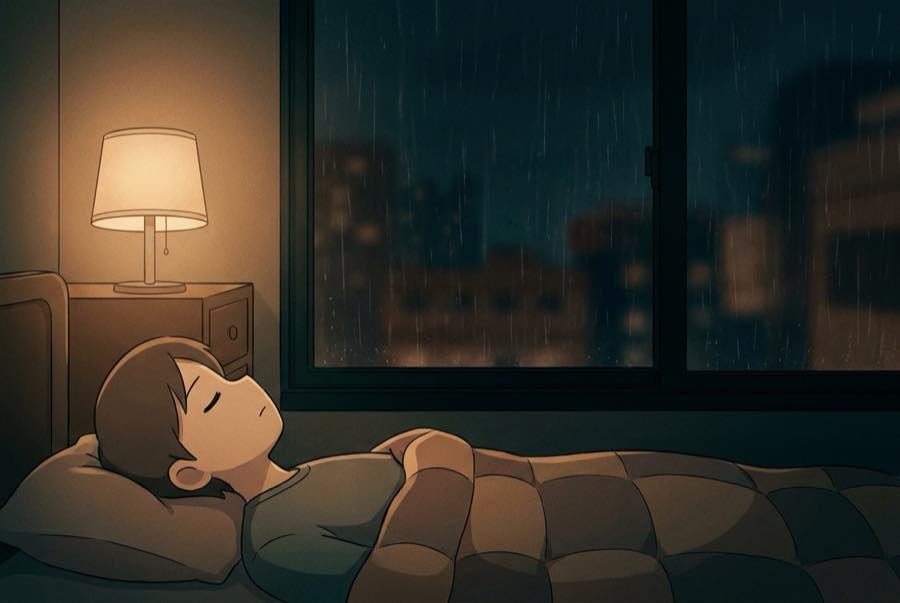
Stress leaves the body last
The thoughts are usually the loud part, so they get the blame. But notice what stress actually feels like at 11pm: a chest that won't quite settle, hands that keep finding something to do, a heartbeat you're suddenly aware of, heat under the collarbones. Whatever set it off may be hours behind you — the meeting ended, the message got sent, the day closed — and the body is still running the tail end of it.
That gap is why the usual advice lands badly. Just relax is an instruction to a system that isn't taking instructions right now. And it's why you can be genuinely exhausted and still wide awake: tiredness and calm are two different states, and stress can hold the second one hostage while the first piles up.
There's also an honest loop worth naming. A stressed night makes tomorrow harder to meet, and a harder tomorrow makes tomorrow night stressier. You cannot break that from inside the bed at midnight by trying harder — trying harder is the one move that reliably backfires here. You break it a little earlier in the evening, with small physical things, and by lowering what tonight has to achieve.
How to sleep when stressed: unwind the body first
None of what follows is a technique you have to be good at. Give the wind-down twenty minutes if you have them, ten if you don't. Order matters less than actually doing two or three of them.
Move the last of it out. Stress is mobilization — the body got ready for something that never arrived. A short walk around the block, a few flights of stairs, or ten minutes of slow, pointless tidying gives that readiness somewhere to go. Keep it gentle. This is a discharge, not a workout; hard training this late tends to wake you up rather than wear you out.
Use heat. A warm shower or bath in the last hour is one of the oldest wind-down tools there is, and it works on the body rather than the mind, which is exactly what you need tonight. Warm hands and feet in particular seem to go with letting go — if you get into bed with cold feet, socks are not a defeat.
Lengthen the exhale. Not a breathing program, just a lean: breathe out for a little longer than you breathe in, through the nose, low in the belly, for a couple of minutes. Slow breathing is a common calming cue and costs you nothing to try; if it feels like effort or makes you count, drop it and move on.
Take the unclench inventory. Lying down, go through the places stress parks itself: jaw, tongue against the roof of the mouth, forehead, shoulders, hands, stomach, feet. Find each one, let it go, move on. You'll come back and find the jaw tight again. Let it go again. The point isn't a perfect release; it's the repeated, boring instruction to stand down.
Put tomorrow somewhere. If the stress has a to-do list attached, write the list on paper by the bed before you lie down — broken phrases, no solving. That takes the remembering job away from the part of you that keeps rehearsing it. If your head is the loudest problem rather than your body, the fuller method for that is on its own page: how to sleep with a racing mind.
Dim early and stop feeding it. The last input before sleep sets the tone. A stressful conversation, a work inbox, a feed full of everything — those aren't neutral, and they re-arm what you just spent twenty minutes standing down.
The one easy thing
Everything above takes a bit of doing, which is unfair when you're already depleted. So the last step is deliberately the easiest one: give the room a steady sound and let it run.
Stress makes a quiet room busier than it is. Silence isn't really silence — it's a floor with things poking through it, and a stressed body treats each small noise as one more thing to check. A constant, low sound raises that floor so the pokes have less to cut against, which is the whole of the mechanism and it's explained properly in why rain sounds help sleep.
The kind of rain matters more than usual tonight. Anything that swells, drops away, or ends in silence gives a keyed-up body a fresh event to react to just as it was settling — which is the whole argument for flat, featureless rain over anything more interesting. We curate Rain for Anxious Evenings for exactly this kind of evening: low, even, nothing sudden anywhere in it, chosen against the checks laid out in what makes a rain sound work. Leave it cycling so it never hands you a silence to notice, and set the level where it reads as weather outside rather than something playing in the room.
Start it earlier than you think — at the beginning of the wind-down, not at lights out. Then the rain isn't a sleep instruction, it's just the sound the evening ends with, and after a couple of weeks the body starts arriving at that sound already halfway down.
If sleep still doesn't come
Some stressed nights don't resolve. The move that helps is leaving — taking the rain with you to a chair in another room, and coming back when your eyes are actually heavy rather than when you've decided enough time has passed; the rest of that method is in how to fall back asleep.
What's left after that is mostly a question of what you're demanding of the night. Stress responds badly to being handed a target, and sleep is the one target that moves further away the harder you aim at it. Many sleepers find that dropping it entirely is what lets sleep arrive sideways, which is annoying but usable.
When the stressed nights outnumber the calm ones
One tense night after a hard day is ordinary. A pattern is different. If it's specifically the night before the week restarts, that has its own shape and its own fixes in Sunday night insomnia. If it's most nights — if the pressure never really lifts, or if the stress is starting to look more like anxiety that's with you in daylight too — that's worth taking to a doctor. Not because something is wrong with you, but because ongoing stress is a real thing to get help with, and it deserves more than a wind-down routine and a good playlist. Sound can make a hard night gentler; it can't lift what's causing it.
If you'd rather explore other sounds — ocean, forest, distant thunder — they're all in the full library of sleep guides. Tonight, don't shop. Pick one and leave it alone.
Walk it off, warm up, unclench, and put Rain for Anxious Evenings on repeat — nothing more is being asked of you until morning.
This article is for general information and isn't medical advice. If sleep problems persist, talk to your doctor.